Skip to content

helm

5 posts with the tag “helm”

The Power of Framing: Why BigConfig is Rebranding as a Package Manager
Package Manager

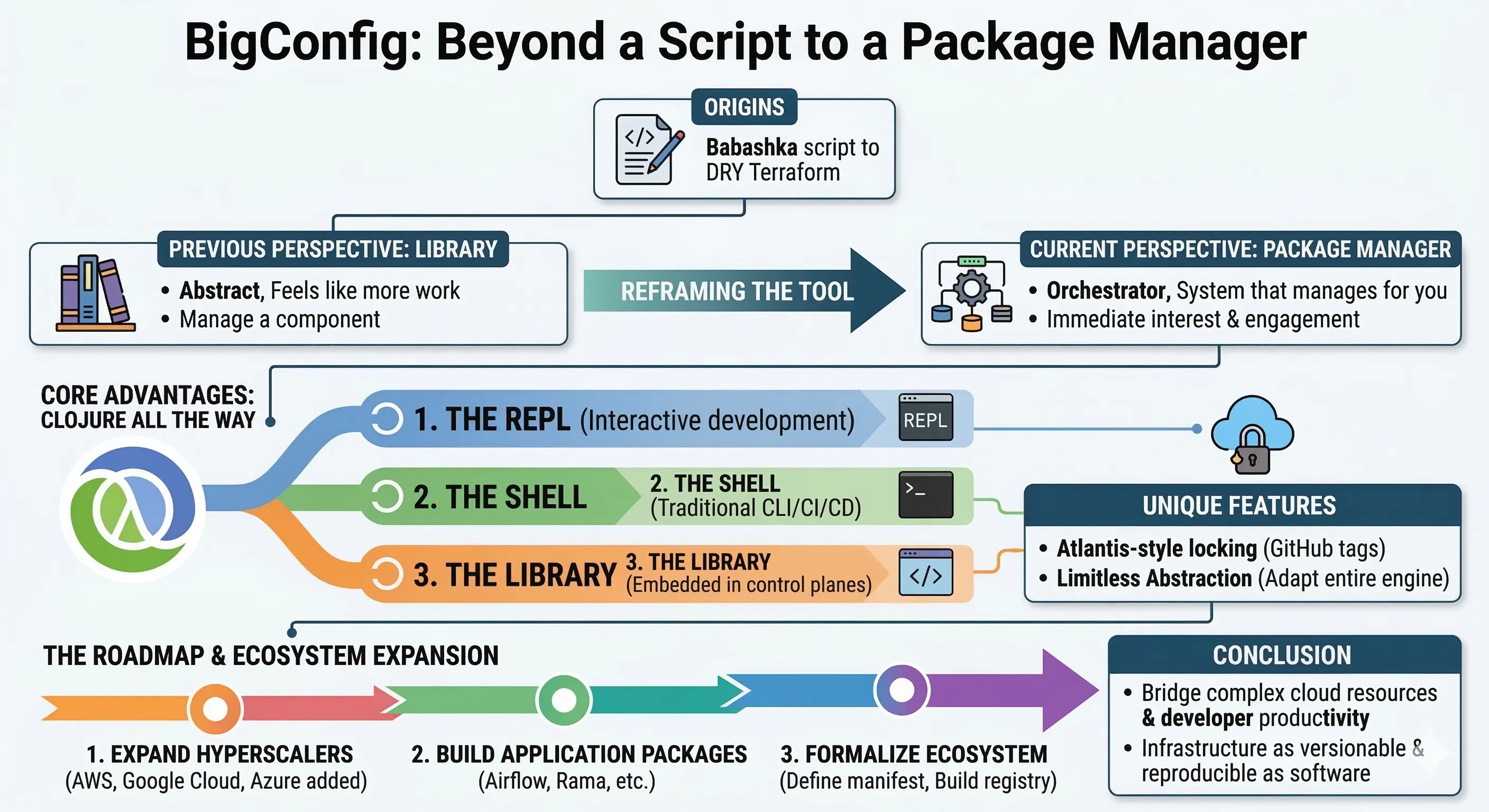
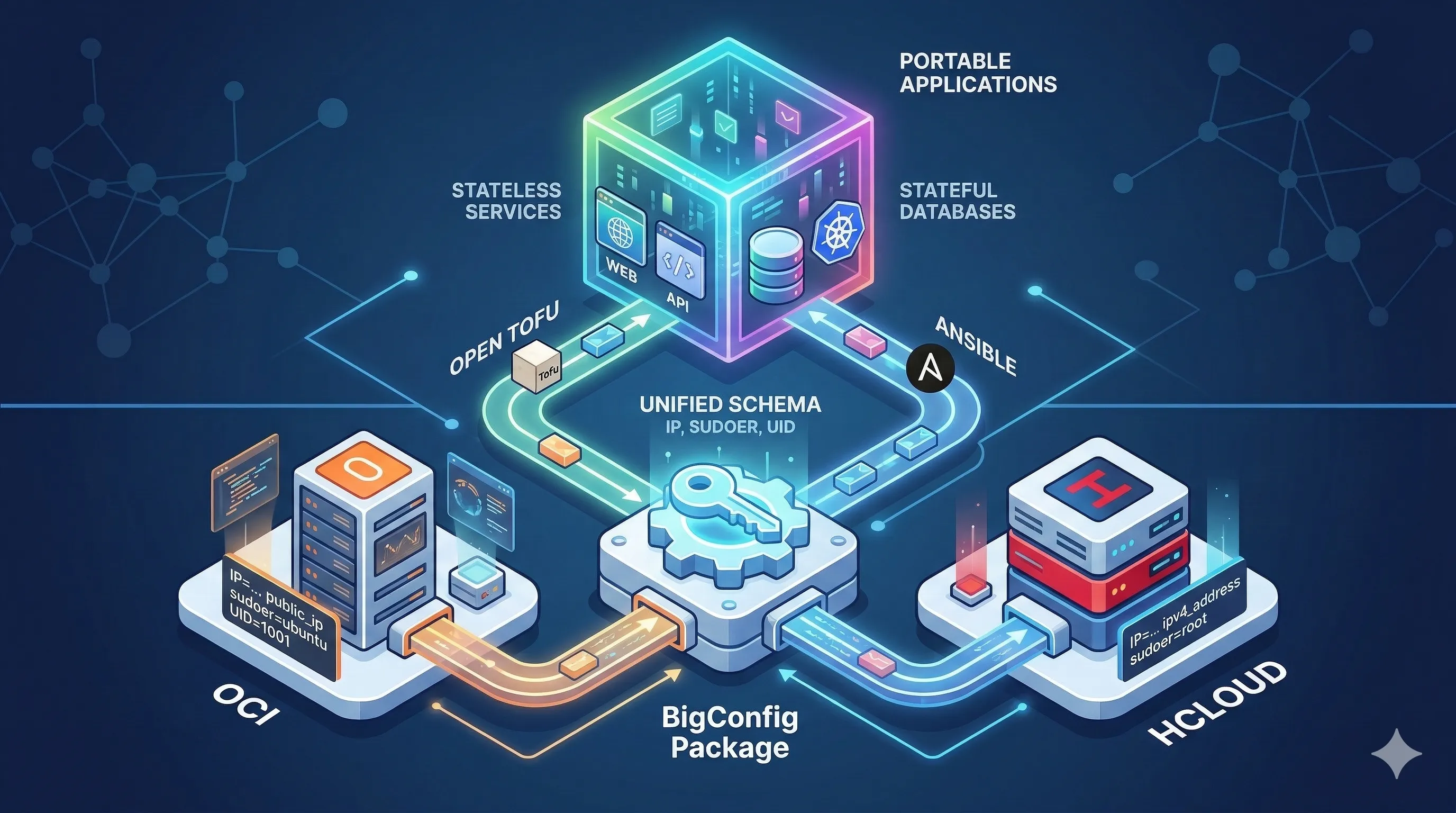
BigConfig started as a modest script to simplify complex Terraform projects, but it has grown into something far more ambitious. By moving beyond the “library” mindset and embracing the role of a package manager for infrastructure, BigConfig overcomes the traditional barriers of language adoption. This article explores how a unified Clojure-based workflow—spanning the REPL, the Shell, and the Library—offers a total solution for developers tired of juggling fragmented YAML templates and rigid deployment schemas.
The YAML Trap: Escaping Greenspun’s Tenth Rule with BigConfig

K8s

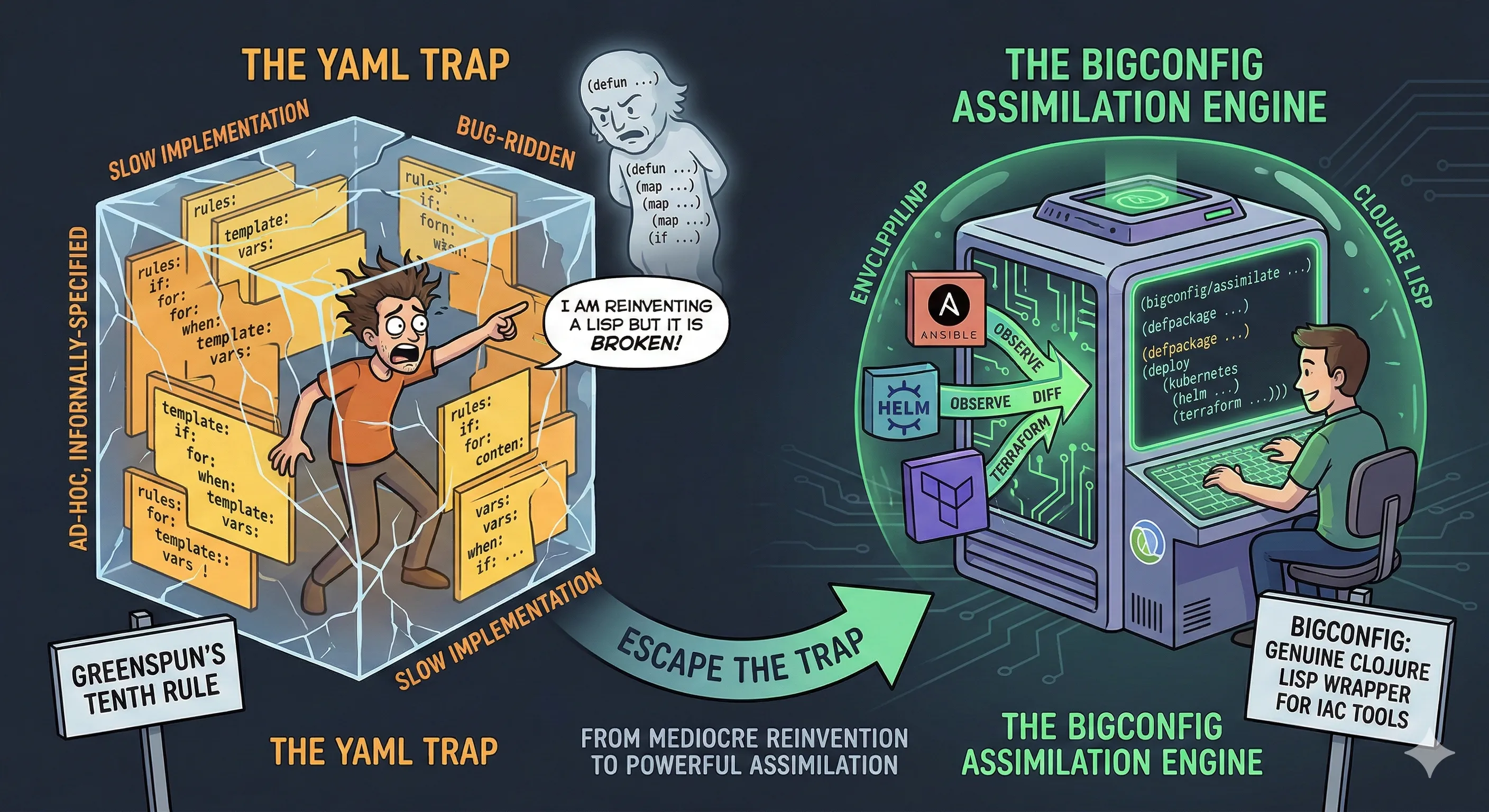
Greenspun’s Tenth Rule warns that every complex system eventually reinvents a buggy version of Lisp. From YAML-hell in CI/CD to the “accidental” programming languages of Helm, Terraform and Ansible, the DevOps world is living this prophecy. Discover how shifting from rigid configuration to the power of Clojure and BigConfig can help you escape the trap of ad-hoc infrastructure logic.

Introducing BigConfig Package

K8s

BigConfig Package moves beyond the “Kubernetes-only” mindset of Helm by treating infrastructure and software as a single unit. By replacing specialized CLIs with Babashka (Clojure), it eliminates the friction between shell scripts and compiled binaries. This approach allows developers to move seamlessly between a CLI, a REPL for debugging, and a library for deep automation.

Beyond the Shell: Reimagining DevOps with the Clojure REPL

dotfiles

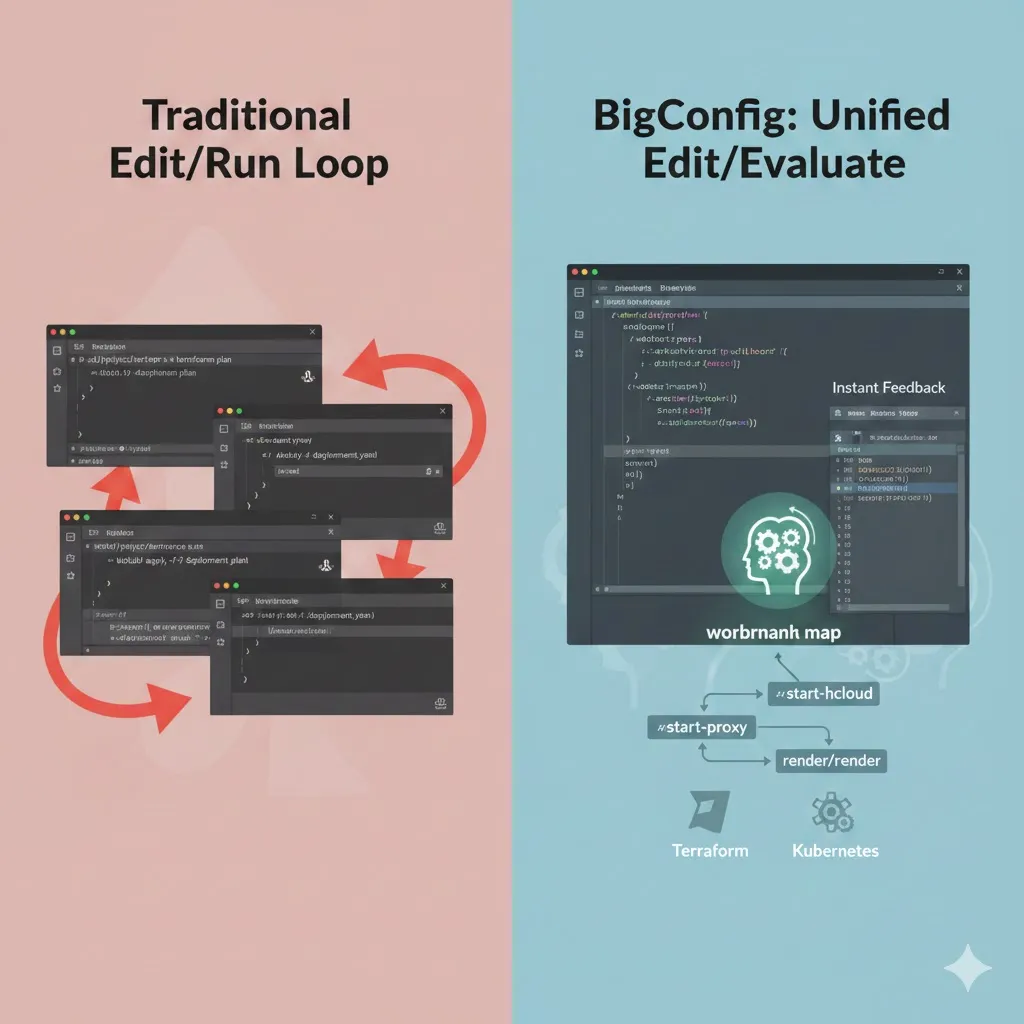
Traditional DevOps workflows are often bogged down by the “Edit/Run” loop, requiring developers to constantly switch between editors, directories, and terminal tabs.

BigConfig solves this by leveraging a persistent Clojure REPL to create a unified “Edit/Evaluate” environment.

By orchestrating tools like Terraform through a centralized “workbench map”, BigConfig eliminates context switching and replaces traditional debugging with instant, stateful feedback.

It transforms fragmented operations into a seamless, code-driven flow where infrastructure and development live in a single, interactive workspace.